

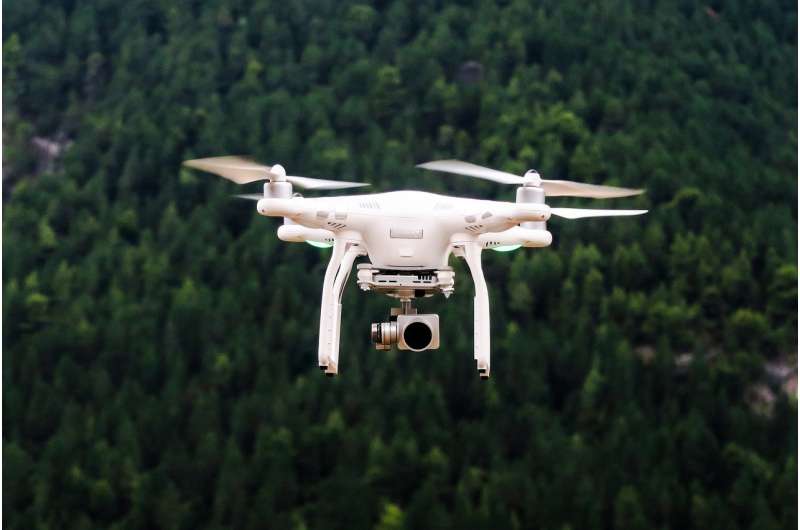
By 2037 the market for drones and autonomous robots is projected to balloon, with commercial drone output potentially multiplying tenfold and complex humanoid or quadruped robots soaring a hundredfold. A recent study published in Chem Circularity projects how this surge could strain the United States and global supply chains for 18 key raw materials that underpin these machines. The authors warn that the escalating need for rare earth magnets and lightweight composites could trigger shortages, while suggesting that leveraging existing industry capacities—particularly those built around electric vehicles—could stave off disruption.
Forecasting the Material Load‑Up
To pinpoint which components might become bottlenecks, the researchers calculated the quantities of 18 base materials required to assemble either one million or ten million units of drones or robots annually. These materials span everything from magnets and batteries to electronics and structural frameworks. The resulting estimates were then weighed against current 2024 consumption levels in both the United States and worldwide to gauge potential strain.
Overall, the analysis indicates that most of the 18 materials will comfortably fit within existing supply chains even at the upper production ceiling. However, a handful of resources emerged as likely points of pressure, demanding preemptive architecture in procurement strategies.
Top Material Threats Identified
Across both production scenarios, neodymium‑praseodymium (NdPr), a rare earth alloy critical for permanent‑magnet motors, tops the list of high‑risk items. This material is especially pivotal for larger humanoid robots, where the researchers estimate that manufacturing one million such units per year could swell NdPr demand by 20% relative to the US’s 2024 usage. Government initiatives are already underway to curb offshore dependence on NdPr suppliers, underscoring the geopolitical stakes.
Carbon fiber and magnesium, chosen for their light‑to‑heavy strength ratios, also surface as potential chokepoints on both domestic and international fronts. These materials are prized for durable frames but could become scarce if demand outpaces current production. By contrast, aluminum—cheaper and far more plentiful—could offer a cost‑effective substitute should premium demand spike, thereby reducing the likelihood of disruption in these sectors.
"Even though the study finds overall manageability, complacency is not an option," notes co‑author Chris Greig, a chemical engineer at Princeton. "In an era of geopolitical volatility, unexpected supply shocks can have outsized consequences for technology, sustainability, and defense."
Building Supply‑Chain Resilience Today
To fortify the supply chain against probable hiccups, the study puts forward three actionable measures that can be introduced without waiting for market pressures:
Integrate with established supply chains that already service the same raw materials. The battery, consumer‑electronics, and telecom sectors already possess mature pipelines for rare earths, lithium, and metals. By aligning drone and robotics production with these existing conduits, manufacturers can tap into proven capacity. Tesla, for instance, has recently signaled this approach as it develops its humanoid platform.
Engineer drones and robots with end‑of‑life in mind. The research highlights the comparatively short operational lifespans—three to five years for drones and five to ten for humanoid robots—relative to longer‑lived utilities like wind turbines. This window of opportunity allows designers to devise modular assemblies that facilitate disassembly, component reuse, and efficient recycling, thereby reducing the strain on virgin material demand.
Create cross‑disciplinary dialogue early in the design cycle. By engaging material scientists, supply‑chain managers, and system architects from the outset, teams can map out contingency plans for alternative materials or substitute subsystems if a critical supply narrows or vanishes.
“By fostering conversations early, we can explore the feasibility of material or system substitutions, granting us flexibility to adapt before a crisis hits,” Ku emphasizes. “The sooner the collaboration, the smoother the supply chain can evolve.”
Take‑away Insights
As the world accelerates toward a future saturated with autonomous drones and robots, the material backbone of these technologies will be under mounting pressure. The key points drawn from the study are:
- Rare earth magnets, particularly neodymium‑praseodymium, will be the linchpin for motor performance across all robot and drone types.
- Carbon fibers and magnesium may struggle to keep pace if demand surges unaided.
- Synergizing with existing high‑tech supply chains—chiefly the EV sector—can mitigate immediate shortages.
- Designing for recyclability shortens the life‑cycle loop, easing recurring demand for new raw materials.
- Early, cross‑functional dialogue hedges against unexpected supply disruptions.
Concluding Thoughts
The study acts as a clarion call for the entire robotics and drone ecosystem: prepare now for tomorrow’s production boom. By strategically aligning with established material pipelines, building modular, recyclable products, and fostering open communication across supply‑chain silos, industry can transform potential bottlenecks into managed risks. With these moves, the exponential growth of autonomous machines can proceed smoothly, without the supply‑chain nightmares that have historically plagued technology hot‑starts.
More information: Managing critical‑material risks for drones and robotics, Chem Circularity (2026). DOI: 10.1016/j.checir.2026.100019

Your Opinion is valid .