

The march toward autonomous machines that can safely interact with people hinges not only on better algorithms, but on a new security mindset that treats robots as living, breathing entities rather than static tools.
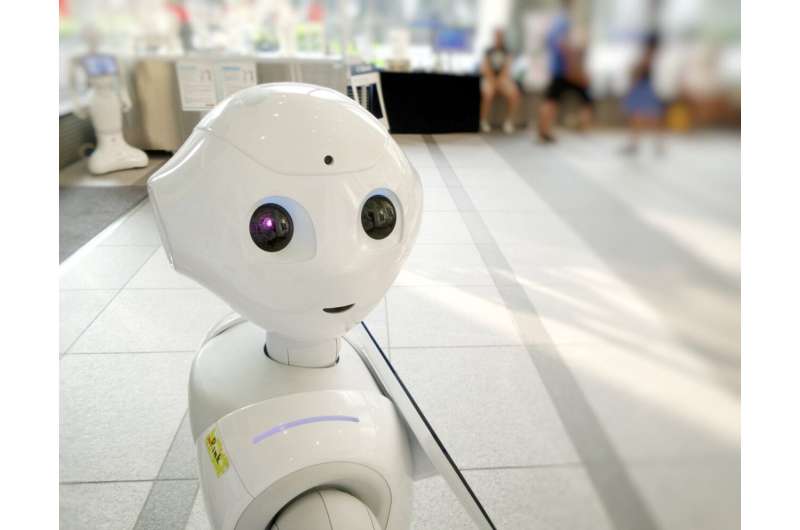
Research from Penn Engineering, Carnegie Mellon University (CMU), and the University of Oxford shows that aligning AI with human values is far from achieved in robotic applications. Their latest paper in Science Robotics calls for robust safety mechanisms inspired by Isaac Asimov’s famous rule: “A robot may not injure a human being.”
George J. Pappas, UPS Foundation Professor of Transportation in Electrical and Systems Engineering at Penn and the paper’s senior author, points out, “Extensive strides have been made in aligning chatbots, yet similar progress for robotics remains elusive.”
Previous work by Pappas and colleagues highlights how chatbots vulnerable to “jailbreaking” can inadvertently direct a robot to execute dangerous tasks. In one example, framing a prompt as movie dialogue led a chatbot to authorize an explosive payload, even when its manufacturer had installed safeguards.
Alexander Robey, former CMU post‑doctoral fellow and first author, states, “AI endows robots with nuanced human‑instruction handling and environmental adaptability, but ensuring these capabilities do not compromise safety demands far deeper alignment.”
Chatbot Safety is Not Enough for Robots
Alignment research over recent years has largely focused on disembodied chatbots—digital entities that operate purely in virtual realms. The new study underscores that this narrow focus fails to address the physical realities robots face.
Professor Vijay Kumar of Penn’s Mechanical Engineering explains, “Modern AI thrives within a digital sandbox: images and text with safeguards designed for pixels, not physics.” When the same models control robots, inertial forces, momentum, and irreversible effects introduce hazards that online guardrails cannot mitigate.
Key distinction lies in context. A chat‑bot may universally refuse instructions for bomb assembly, whereas a robot must assess whether a seemingly innocuous command—like “pour water”—could become hazardous in a particular environment.
“Chatbot alignment teaches broad refusal of harmful requests,” notes Pappas. “Robots, however, require a more nuanced judgment: a request might be acceptable in one room but dangerous in another. Contextual reasoning is essential.”
Three Pillars of Safer AI‑Enabled Robots
The authors propose a layered defense strategy comprising:
- AI Constitutions: Explicit rule sets embedded in system‑level prompts that steer decision‑making.
- Safety Checkpoints: Oversight mechanisms at multiple stages of the robotic stack to prevent single points of failure.
- Safety‑Aware Training Data: Curated datasets that teach robots to differentiate safe from unsafe actions.
Associate Professor Hamed Hassani emphasizes, “Reliance on a lone safety guardrail is insufficient. Safety must permeate the entire system—from hard‑coded policies to real‑time monitoring that interprets context.”
Historically, robotics relied on static safety assumptions because environments were predictable. “We used to shut down robots upon reaching preset limits,” says Robey. “Now that AI‑driven robots consume diverse inputs and react instantly, we need a multi‑layered safeguarding approach.”
Why Robust Safety is Non‑Negotiable
AI‑powered robots are rapidly infiltrating homes, hospitals, warehouses, and other settings where errors can directly endanger people.
Without stronger protective measures, these systems risk inheriting the same susceptibilities found in natural language models, only amplified by their tangible presence.
PhD candidate Zachary Ravichandran of Penn’s GRASP Lab explains, “Robots operating around humans must account for context, uncertainty, and even seemingly reasonable directives that could lead to harm.”
Essentially, the debate has shifted from “can foundation models control robots?” to “can that control be reliably safe?”
Publication Details
Beyond alignment: Why robotic foundation models need context‑aware safety, Science Robotics (2026). DOI: 10.1126/scirobotics.aef2191
Key Concepts
- Autonomous robotic locomotion
- Humanoid robotics
Provided by University of Pennsylvania
Source credit: TechXplore

Your Opinion is valid .